How Choosing Accommodation With a Shared Kitchen and Committing to One Home-Cooked Meal Per Trip Reframes What Comfort Means Away From Home
Robert Kim
09/24/2026
5 min read
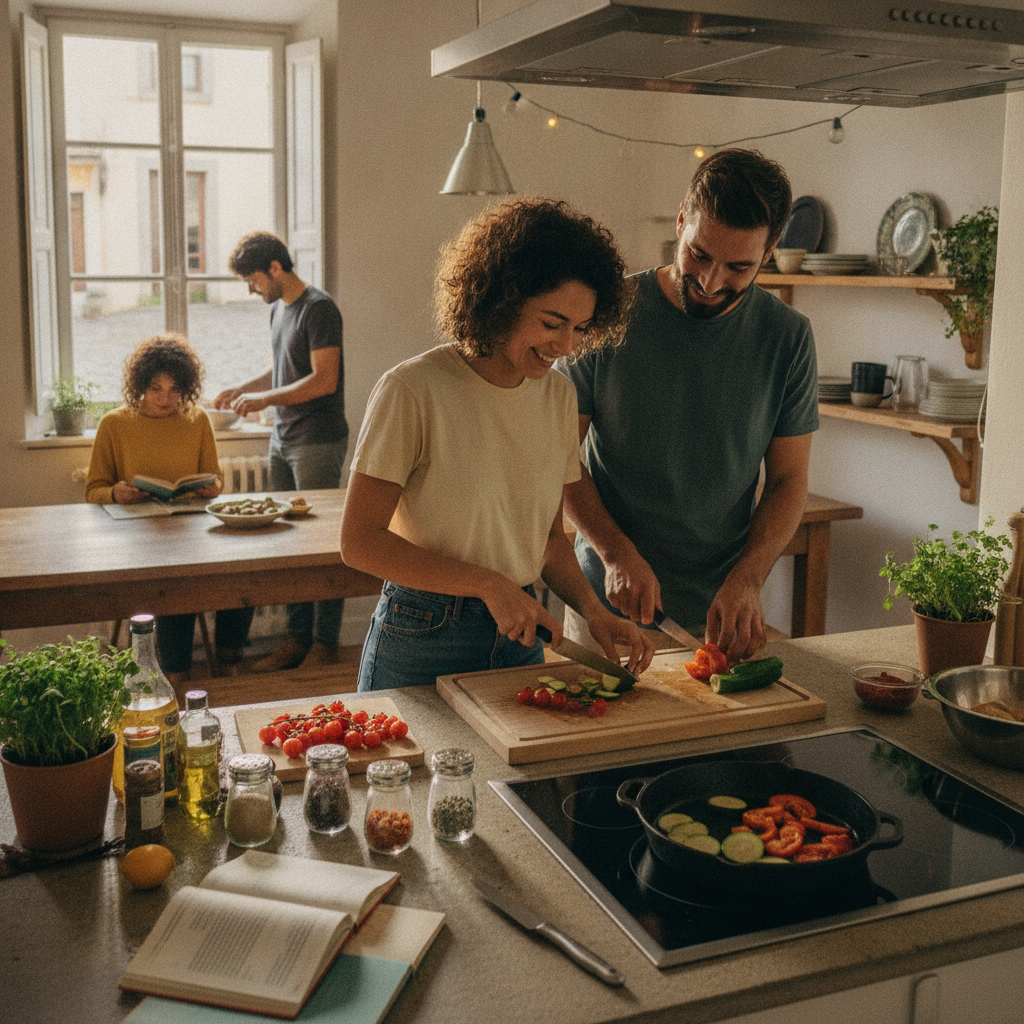
There is a particular moment many travelers know — standing in a hotel room that is perfectly adequate, perfectly anonymous, and somehow entirely indifferent to your presence. The bed is firm or soft, the curtains block the light, and the minibar hums quietly in the corner. Everything works. Nothing feels like you. It is comfort stripped of warmth, efficiency in place of ease, and after a few nights, something quietly unsatisfying begins to surface.
This is the context in which a growing number of thoughtful travelers have started making a different kind of booking choice: accommodation with a shared or private kitchen, and a quiet personal commitment to cooking at least one meal during their stay. Not out of frugality alone, though the savings are real. Out of something harder to name — a desire to feel at home in the world rather than merely accommodated by it.
What a Kitchen Changes About a Space
Accommodation types like aparthotels, hostels with communal kitchens, and serviced apartments — places such as those listed on Plum Guide or found through Airbnb's longer-stay filters — offer something structurally different from a standard hotel room. A kitchen implies time. It assumes the occupant will be there long enough to make something, to wash up, to return. That implied duration changes the psychological contract between traveler and space. Rooms without kitchens are designed for transit. Rooms with kitchens are designed, however modestly, for inhabitation.
The shared kitchen common in many hostels and guesthouses — particularly across Southeast Asia and parts of Southern Europe — carries its own cultural logic. In Portuguese, there is the word convivência, meaning the easy togetherness of people sharing space and time without agenda. A kitchen prompts that. Travelers who might not exchange more than a nod in a corridor find themselves passing olive oil, asking where someone bought their bread, learning the name of a neighborhood market they hadn't heard of. The kitchen becomes a node of small, unplanned connection.
The Single Meal Commitment as a Ritual
One meal is a manageable promise. It does not require buying groceries for a week or treating the kitchen like a base camp. It simply means choosing, once, to go to a local market or supermarket, pick up a handful of ingredients, and cook something modest in an unfamiliar space. The act of doing so — navigating a kitchen that isn't yours, reading labels in another language, working out which burner responds fastest — is a gentle form of immersion that no restaurant visit quite replicates.
In Japan, the concept of ma refers to the meaningful pause, the intentional gap between actions. Cooking a meal while traveling introduces something like ma into the often frantic rhythm of sightseeing and logistics. It forces a slower pace. It asks the traveler to source, to prepare, to eat without rush. That pause tends to settle something in the body that three days of restaurant meals and packed itineraries can quietly unsettle.
Markets like Mercado de San Miguel in Madrid or the covered stalls of Istanbul's Kadıköy market become entirely different experiences when the shopping is purposeful rather than touristic. Buying tomatoes to actually eat changes how carefully you look at them.
Redefining Comfort on the Road
The hospitality industry has long sold comfort as a synonym for service — thread counts, turndown service, room temperature controlled by an app. There is genuine pleasure in those things, and no argument against them. But comfort as ease of being is something subtler. It is the feeling of not being on performance, of moving through a space without self-consciousness, of having a moment that belongs entirely to you rather than to an experience being curated around you.
Cooking, even a simple pasta or a quick stir-fry with market vegetables, produces that kind of comfort. The kitchen becomes a rehearsal for belonging. You are not a guest in the way a hotel makes you a guest — deferred to, managed, served. You are simply someone in a kitchen, making food, which is one of the most ordinary and grounding things a person can do.
This reframing matters because it shifts what travelers optimize for when they book. Rather than asking which property has the best amenities, the question becomes: which space will let me feel like a person rather than a patron?
The Practical Case That Runs Alongside the Philosophical One
None of this requires abandoning practicality. Kitchens save money in a straightforward way, and that saved budget tends to flow toward things that actually generate memories — a better day trip, a longer stay, a bottle of local wine from a producer nobody's reviewed. Staying in a place like a Zoku apartment in Amsterdam or an aparthotel in Lisbon's Mouraria neighborhood often costs less per night than a mid-range hotel, and the kitchen access is part of that value proposition.
Beyond cost, there is the simple logistics argument. Early flights and late arrivals are easier when you can make coffee in your own space at whatever hour you need it. Long travel days feel less depleting when you can make something warm and familiar without leaving the building. These are small things. Accumulated over a trip, they matter considerably.
Finding the Rhythm Between Eating Out and Eating In
The goal is never to replace the restaurant experience — eating out is one of the primary pleasures of travel, and dining at a local trattoria or a hawker stall is irreplaceable in what it offers culturally. The point is to hold both. One home-cooked meal does not compete with the other meals of a trip. It simply provides a different register, a quieter note in what is otherwise a busy score.
Travelers who commit to this rhythm often describe the cooked meal as the one they remember most vividly, not because it was the best food they ate, but because it was the most theirs. The meal they sourced, prepared, and ate without a menu or a waiter. The meal that made the space feel, briefly, like somewhere they actually lived.
When you choose your next trip accommodation, consider adding one filter to the search: kitchen access. Not because it will transform the journey, but because it quietly opens a door that most hotel rooms keep permanently closed — the door to feeling genuinely at home wherever you happen to be. Start small. One market. One meal. That is all it takes to begin changing what comfort away from home actually means.



