How Researching a Destination's Informal Gathering Spots — Benches, Squares, Covered Markets — Before You Land Changes Where You Actually Spend Your Downtime
Robert Kim
09/14/2026
4 min read
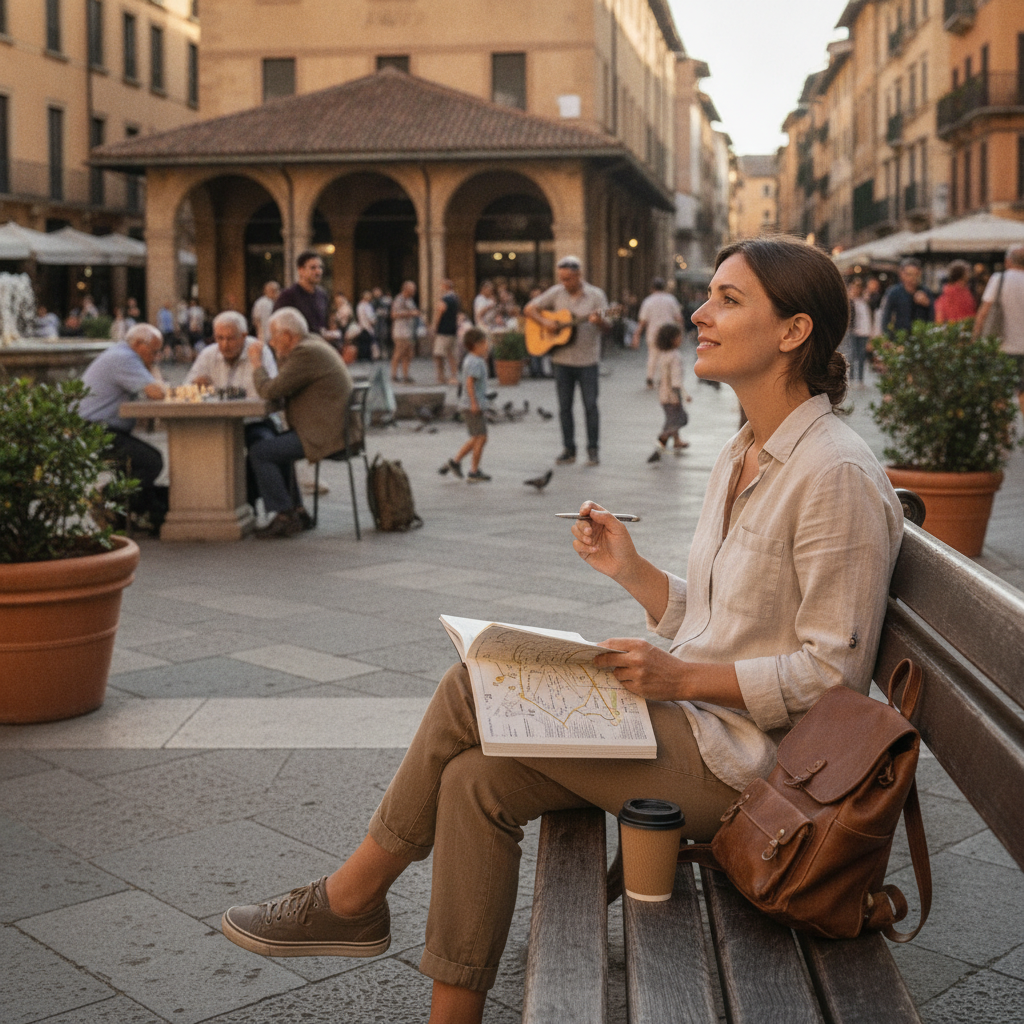
There's a certain kind of traveler who arrives somewhere new and spends the first two days circling the same tourist loop — the cathedral, the viewpoint, the restaurant with the longest review thread — before quietly wondering why the place doesn't feel quite real yet. The itinerary gets checked off, but something essential stays just out of reach. What's usually missing isn't effort. It's orientation toward the places where a destination actually breathes.
Why Informal Spaces Hold the Real Character of a Place
Every city has its official landmarks, and most travelers find them without difficulty. But the informal gathering spots — the shaded square where pensioners play cards at noon, the covered market that comes alive on Thursday mornings, the particular bench row along a canal where locals walk dogs and stop to talk — rarely appear on highlight reels. These spaces carry the quiet social logic of a place. They reveal how people organize their leisure, how neighborhoods function outside of commerce, and what rhythms actually shape daily life. Knowing they exist before arrival means a traveler can choose to be present there, rather than stumbling across them by accident on the last afternoon.
What Pre-Arrival Research Actually Looks Like
Researching informal gathering spots doesn't require hours of deep reading. Travel forums like those on Reddit's r/solotravel, neighborhood-specific subreddits, and local expat blogs often surface the kinds of places guidebooks don't prioritize — the Cours Mirabeau benches in Aix-en-Provence, the Friday afternoon crowds at Jemaa el-Fna in Marrakech, the quiet covered arcades of Bologna that locals use as daily shorthand rather than tourist destinations. Apps like Mapstr, which allows users to save and share location lists, can hold curated collections put together by residents. A half-hour spent with these sources before packing produces a very different trip than one organized solely around reviewed restaurants and ticketed sites.
How Prior Knowledge Shifts Decision-Making on the Ground
When a traveler already knows that a particular square fills up on weekend mornings, or that a covered market closes early on Mondays, that knowledge quietly restructures how each day takes shape. Downtime stops being filled reflexively — another café, another gift shop — and starts being allocated with intention. The difference isn't dramatic, but it accumulates. A traveler who spends ninety minutes on a particular afternoon sitting in the right square, watching the actual rhythm of a neighborhood, returns home with a different quality of memory than one who ticked off the same number of paid attractions. The informal spaces become anchors rather than afterthoughts.
The Role of Local Routine in Feeling Less Like an Outsider
Familiarity with gathering spots also changes the social texture of a trip. Arriving at a covered market knowing roughly when vendors take breaks, or finding a bench square that locals actually use rather than one preserved for photographs, produces a subtle but real shift in how a traveler is perceived and how they perceive themselves. There's less performance involved. The traveler is simply present in a place that has its own ongoing life, rather than an audience member at a curated experience. In cities like Lisbon, where the Largo do Intendente square has become a genuine neighborhood hub, or in Istanbul, where certain courtyard spaces near the Spice Bazaar remain largely outside the tourist circuit, that distinction matters considerably.
When to Let the Research Lead and When to Step Back
Pre-arrival research on informal spaces works best as a loose framework rather than a fixed schedule. The goal is to arrive knowing where to look, not to recreate a checklist in a new location. If a particular square turns out to be quieter than expected, or a covered market has shifted its schedule, that flexibility is part of what makes the research valuable in the first place — it creates informed wandering rather than rigid expectation. The traveler who knows that the Mercado de San Ildefonso area in Madrid holds informal evening gatherings nearby doesn't need to be there at a specific minute. Knowing the general geography and timing is enough to make organic discovery far more likely.
How to Build This Into Your Pre-Trip Routine
Before your next trip, set aside a short session — thirty to forty-five minutes — specifically for mapping informal spots rather than attractions. Search for the destination's name alongside terms like "local squares," "morning markets," "neighborhood bench areas," or "where locals actually go." Look at Google Maps satellite view to identify covered arcades, shaded plazas, or waterfront benches that reviewers rarely photograph but residents clearly use. Save these to a list in Google Maps or Mapstr so they're accessible offline. Then, once you arrive, treat these locations as loose destinations for your downtime rather than your primary itinerary. Let the formal sights fill the planned hours — and let the informal spaces fill the rest.
The trips that feel most genuinely immersive usually have this quality in common: the traveler spent some portion of their time in places that weren't designed for them. A little research before landing makes finding those places far less a matter of luck, and far more a matter of simply knowing where to look.



