Why Selecting One Long-Stay Destination Per Year Instead of Multiple Short Trips Fundamentally Shifts How Deeply You Recover
Robert Kim
10/07/2026
5 min read
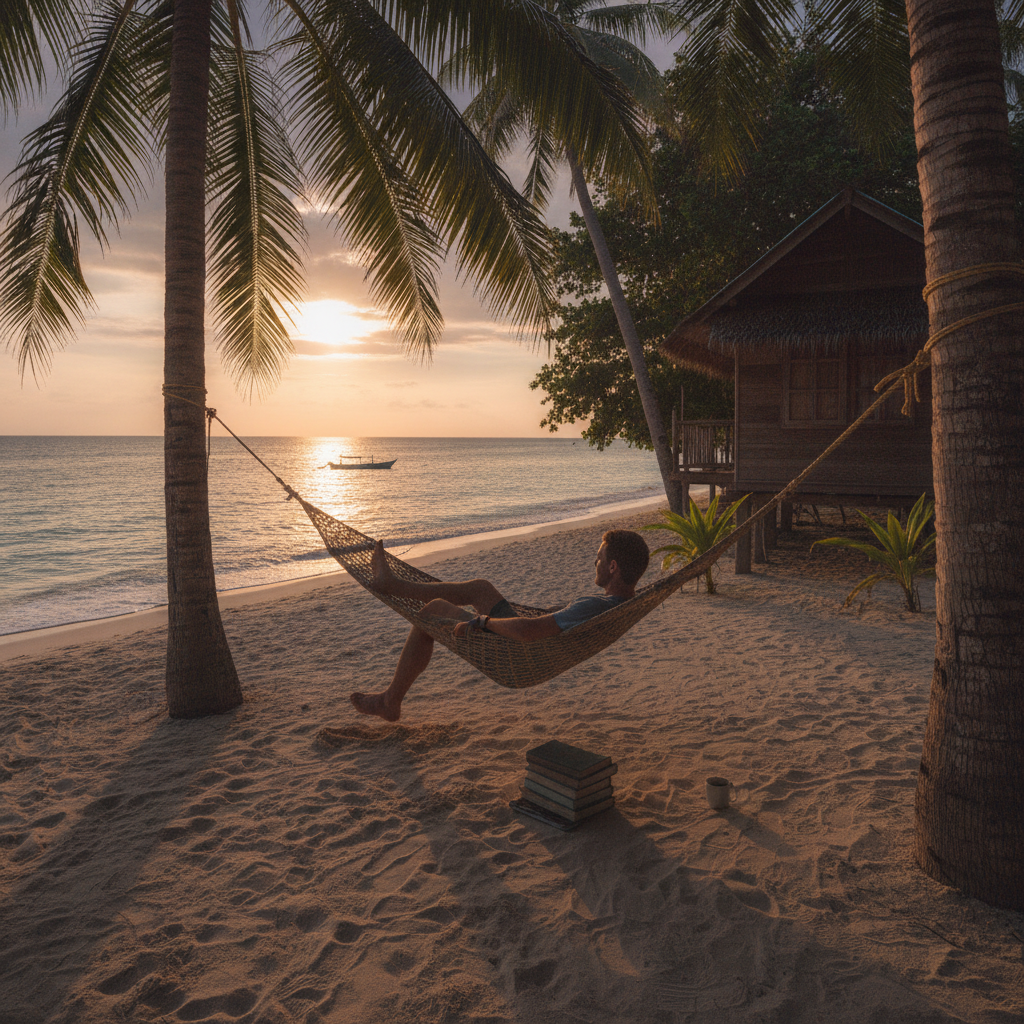
There is a particular kind of tiredness that no weekend away can touch. It settles in slowly — accumulated across months of deadlines, decisions, and the low-grade friction of modern routine — and it requires something more patient than a four-day itinerary to begin dissolving. Most people sense this intuitively, yet the dominant travel model keeps pulling in the opposite direction: more destinations, more airports, more carefully timed long weekends stitched together like a patchwork solution to a problem that needs real time to heal.
The Difference Between Visiting a Place and Living Inside It
Short trips operate on a particular kind of urgency. There is always a list, always a next meal to locate, always the quiet pressure of making the most of a limited window. This mode of travel can be genuinely pleasurable — but it rarely produces rest, at least not the deep, systemic kind. The body adjusts to a new time zone just as the flight home arrives. The mind begins to slow just when it needs to accelerate again. A long-stay destination — somewhere a traveller commits to for three, four, or even six weeks — removes that compression entirely. Oaxaca, the Algarve coast, Chiang Mai, a rented flat in Bologna's centro storico: these are not just locations but environments that a person slowly learns to inhabit rather than consume.
The shift is not merely logistical. When a traveller stays long enough to find a preferred café table, to recognise the woman who sells bread at the morning market, to know which street floods when it rains — something in the nervous system begins to settle. Psychologists sometimes call this environmental mastery, the quiet confidence that comes from knowing how a place works. It is the opposite of the hypervigilance that characterises most tourism, where every corner requires a decision and every interaction starts from zero.
What the Body Actually Needs to Begin Recovering
The physiology of recovery is slower than most travel calendars acknowledge. The stress hormones that accumulate across a demanding year do not flush out over a long weekend. Sleep quality typically improves only after several nights in a consistent environment, once the body stops holding itself slightly alert to unfamiliar sounds and light patterns. Appetite regularises. The digestive system, often subtly disrupted by irregular schedules and airport food, begins to settle into rhythm. None of this can happen when the travel window is too short to outlast the adjustment period itself.
A longer stay makes room for what might be called recovery lag — the gap between arriving somewhere and actually beginning to rest. Short trips are almost entirely consumed by this lag, leaving the traveller with photographs but not much genuine restoration. A month in Lisbon or a five-week stay in Kyoto allows the lag to pass and something quieter to begin. The days stop feeling like they need to be maximised. Walks happen without a destination. Afternoons become genuinely unscheduled. That unscheduled quality is not laziness — it is the texture of actual recovery.
Slow Travel and the Cultural Concept of Being Present
Many cultures have language for what slow travel instinctively offers. The Danish concept of hygge — a sense of cosy, unhurried togetherness — is not something a traveller can absorb in forty-eight hours. The Italian dolce far niente, or the sweetness of doing nothing, requires a certain permission that short-trip urgency never quite grants. The Japanese idea of ma — the meaningful pause, the productive empty space — begins to make sense only once a traveller has spent enough time in a place to stop filling every gap. These are not tourist experiences. They are what becomes available when a visitor stays long enough to stop being one.
Choosing one long-stay destination per year is partly about surrendering the fantasy of maximum coverage. It means accepting that Dubrovnik and Medellín and Tbilisi will not all happen this year, and that the depth offered by a single sustained place is worth more than the breadth of four hurried ones. This is not a popular trade-off in a travel culture organised around bucket lists and Instagram itineraries — but it is the one that actually produces the kind of rest people describe years later as genuinely transformative.
What You Carry Home When You've Actually Had Time to Arrive
When you return from a long stay rather than a short trip, the quality of what you bring back is different. It is not a collection of highlights or a tasting menu of a place's greatest moments. It is something more like a relationship — with a neighbourhood's particular morning light, with the rhythm of a local market, with your own habits observed in a new context over enough time to actually learn from them. You remember what it felt like to slow down, not just that you did. That memory becomes a reference point for the rest of the year, a reminder that a different pace is possible — one that doesn't require another flight to access.
The person who returns from three weeks in a rented apartment in Porto, having learned the bus routes and the best bakery for pastéis de nata and the particular quiet of a Sunday afternoon there, has not just had a holiday. They have practised a different mode of being — one grounded in presence rather than documentation. And that practice, however briefly held, tends to leave a residue. It changes slightly how they move through ordinary days. It lowers, if only a little, the internal threshold between rushing and resting.
There is something worth returning to in that image of the accumulated tiredness — the kind no long weekend resolves. The answer, it turns out, is not more trips. It is one that lasts long enough for the place to stop being a novelty and start being a context. That is when recovery, the real kind, begins.



