How Treating Your Home as a Sensory Environment Rather Than a Space to Organize Changes How You Rest
Robert Kim
07/29/2026
5 min read
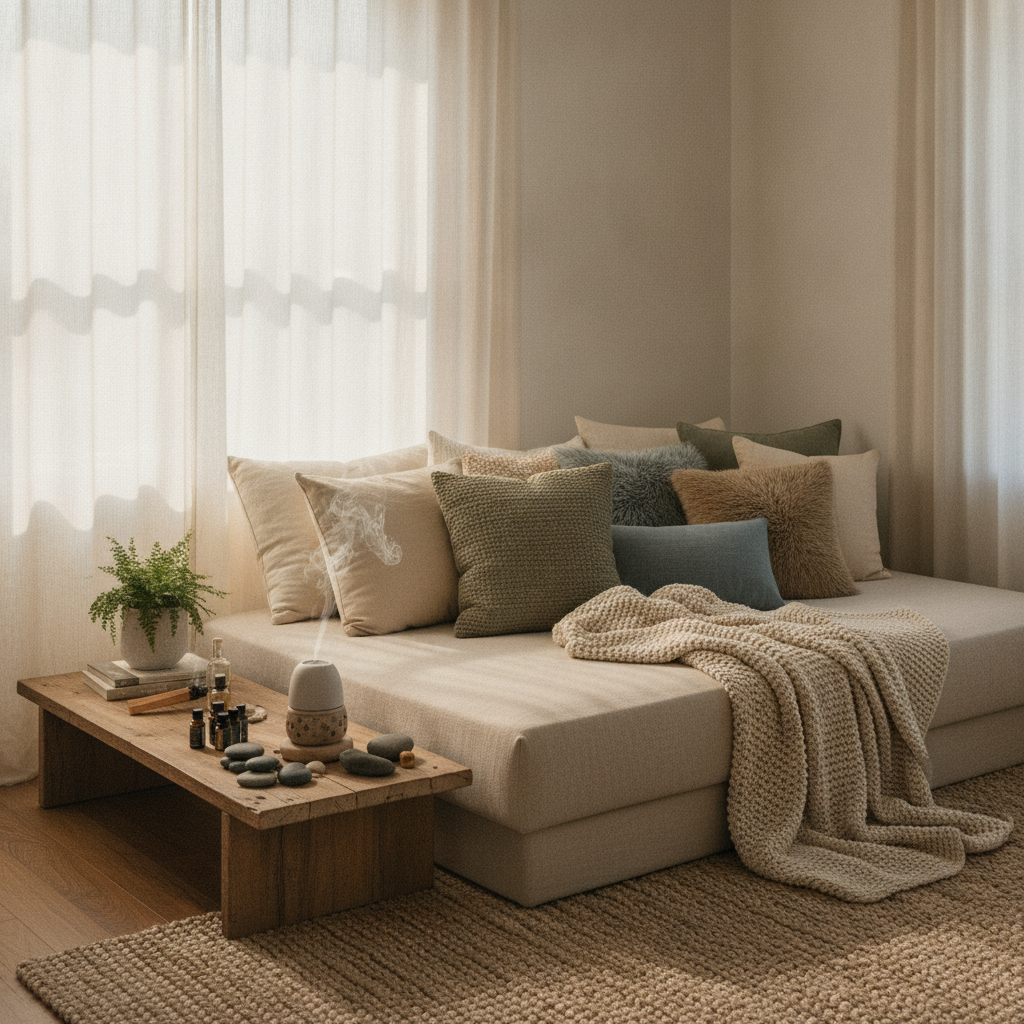
Most people approach their homes as problems to be solved — clutter to be cleared, surfaces to be wiped, rooms to be arranged into better versions of themselves. The organizing industry has built an enormous culture around this instinct, and while tidiness has its genuine merits, it addresses only the visual layer of a space. What gets left out of that conversation is everything the body registers before the eyes do: the temperature of a room, the particular quality of afternoon light, the faint hum of appliances, the weight of a blanket against skin. When people start thinking about their homes as sensory environments rather than containers to be optimized, something shifts — not just in how their spaces feel, but in how deeply they're able to rest within them.
The Limits of Visual Organization as a Rest Strategy
The appeal of a well-organized room is real. Visual order does reduce a particular kind of mental friction, and there's good reason why books like The Life-Changing Magic of Tidying Up found such a wide audience. But sensory rest requires more than a clear countertop. The nervous system responds to a far broader range of inputs than what the eye processes — sound, texture, temperature, scent, and the subtle cues of spatial proportion all register below conscious awareness. A room can be immaculate and still feel relentless, bright and sharp and faintly demanding, the kind of space that keeps the body in a mild state of alertness rather than allowing it to genuinely settle.
What Sensory Design Principles Actually Address
The field of biophilic design — which holds that human wellbeing is connected to natural environments and their sensory qualities — has long influenced commercial spaces like hotels and healthcare settings, but its applications for home life are equally relevant. The principle centers on the idea that environments communicate through multiple channels simultaneously. Soft, layered lighting registers differently than overhead fluorescence. A room with varied textures — rough linen, smooth wood, woven cotton — creates a kind of sensory depth that a uniformly smooth space doesn't offer. Brands like Muji and Belgian linen producers like Libeco have built entire aesthetics around this principle, offering materials that feel considered rather than merely convenient.
The Role of Acoustic Texture in a Resting Space
Sound is perhaps the most underestimated dimension of how a home feels. Hard floors, bare walls, and minimal furniture create acoustic environments that are sharp and reflective, subtly amplifying household noise in ways that keep the nervous system on low-grade alert. Soft furnishings — curtains, rugs, upholstered chairs, bookshelves lined with books — absorb sound and create what acoustic designers call a damped environment, one that feels quieter without necessarily being silent. Neighborhoods in older European cities are often lined with thick-walled apartments that produce this effect naturally, and people frequently describe feeling calmer in them without being able to articulate exactly why. The quality of quiet in a room matters as much as its presence.
Scent as an Ambient Signal to the Body
Aromatherapy carries some cultural baggage — it's easy to associate it with wellness products that overpromise — but the physiological relationship between scent and the nervous system is well established. The olfactory system has a direct pathway to the limbic brain, which governs emotional regulation and memory, making scent one of the fastest ways to shift a body's baseline state. In Japanese culture, the practice of kōdō — the art of appreciating incense, sometimes called "listening to fragrance" — treats scent as a meditative sensory experience rather than a background amenity. Bringing intentional scent into a home doesn't require elaborate ritual; a consistently used essential oil diffuser, a particular candle used only in the evening, or the natural scent of dried herbs can all function as reliable cues that tell the body rest is appropriate here.
Light Quality and the Architecture of Winding Down
The color temperature of light — measured in kelvins — has a direct effect on the body's production of melatonin, the hormone that regulates sleep onset. Cool, blue-spectrum light keeps the brain in a state of wakefulness, while warm, amber-spectrum light supports the physiological transition toward sleep. Most standard home lighting defaults to ranges that work well for productivity but work against rest. Smart bulb systems like Philips Hue allow for automated warm-light shifts in the evening hours, essentially letting the architecture of a room participate in the body's wind-down process rather than working against it. Even without smart technology, simply swapping overhead bulbs for warm-toned alternatives and relying more on lamps makes a measurable difference in how a space feels after dark.
Tactile Comfort as a Form of Physical Permission
There's a reason that certain spaces — a well-worn armchair, a bed layered with heavy blankets, a couch with cushions that have adapted to repeated use — feel immediately restful in a way that newer, stiffer furniture doesn't. The body interprets tactile softness and gentle pressure as signals of safety, which is the prerequisite state for genuine rest. Weighted blankets have become mainstream in part because they replicate a kind of pressure that the nervous system associates with being held or grounded. Beyond dedicated products, simply prioritizing texture when choosing home fabrics — favoring materials that feel generous against skin rather than ones that merely photograph well — builds an environment that the body finds genuinely welcoming.
Reframing What a Well-Rested Home Actually Means
Once you begin thinking of your home as a sensory environment, the questions you ask about it change. It's no longer only about what needs to go where, but about what the room actually feels like to inhabit — at seven in the morning, at noon, at the end of a long evening. You start noticing which chair your body consistently gravitates toward and asking why. You become aware of which lighting arrangement makes you feel most at ease, which textures you reach for, which scents you've come to associate with unwinding. This kind of attentiveness doesn't require a renovation or a significant budget; it requires a different kind of observation, one that treats the body's responses as useful information rather than incidental reactions. The organized home and the restful home are not the same thing, and recognizing that difference is where genuine change begins — not in the drawer you finally sorted, but in the way a room meets you when you walk through the door.