How Grouping Your Wardrobe Gaps Into Functional Roles Before Shopping Stops You From Buying What You Already Effectively Have
Jennifer Walsh
09/13/2026
5 min read
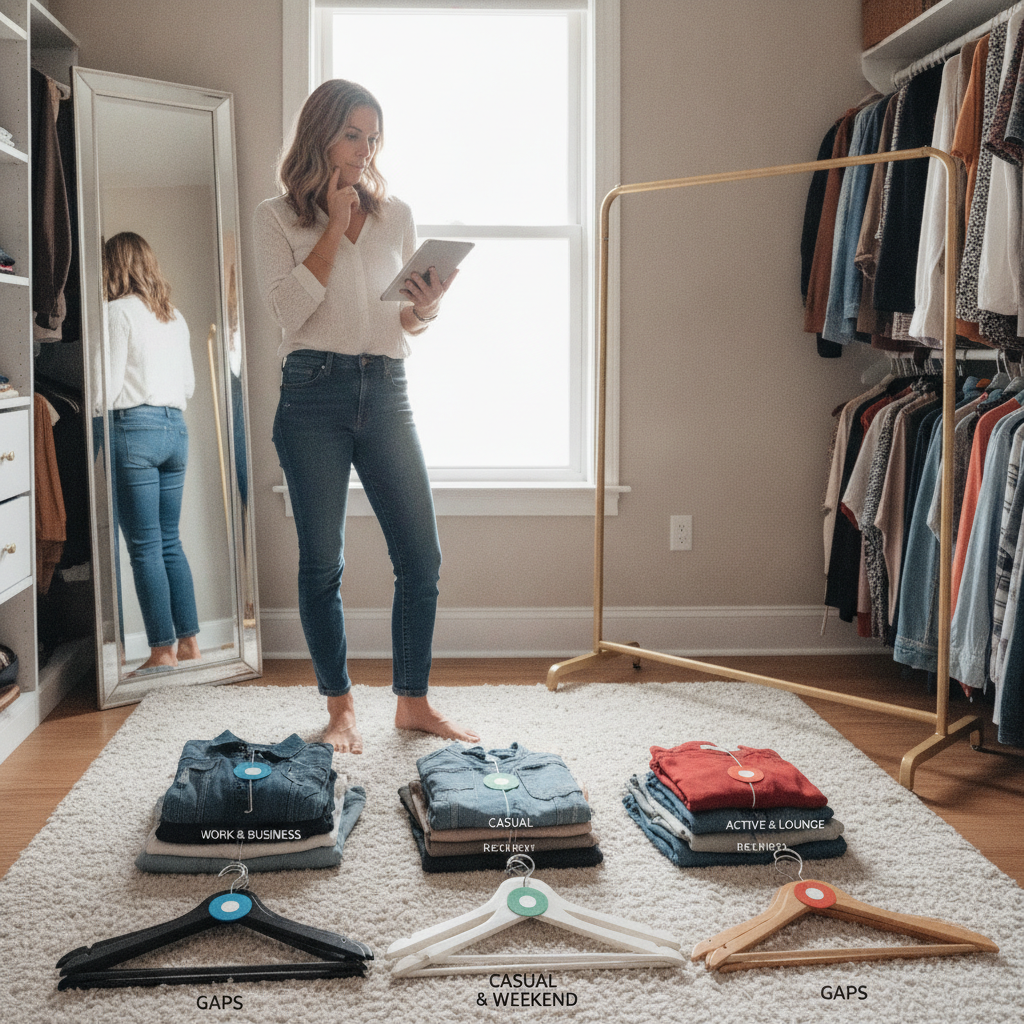
Most people have stood in front of a full closet and still felt like they had nothing to wear. That feeling usually isn't about having too little — it's about not knowing exactly what's missing and why. Without a clear sense of what role a new piece needs to fill in your actual daily life, shopping becomes guesswork, and guesswork leads to duplicates. You end up with three black tops that all do roughly the same thing and a lingering sense that something still isn't quite right.
Define the Life Zones Your Clothes Need to Serve
Before you open a single browser tab or walk into Zara, think about your week in concrete terms. Where do you actually go? What are the recurring situations your wardrobe has to handle — not the ones you imagine, but the ones that happen every week without exception? Most people's lives break down into three to five real zones: work or client-facing settings, casual errands and social time, active movement, and the occasional elevated occasion. Mapping those zones honestly is the first move toward shopping with intention rather than impulse.
List What Each Zone Currently Has Working For It
Once you know your zones, take stock of what's already covering each one effectively. Not what's in your closet in theory — what you actually reach for without thinking. Those are the pieces that are doing their job. When you audit by zone rather than by category, patterns become obvious fast. You might discover your casual zone is overstocked with options while your work zone is running on two rotating pieces that are starting to show wear. That's the kind of clarity that tells you where a real gap exists.
Separate Genuine Gaps From Preference Gaps
A genuine gap means a zone is functionally underserved — you're making awkward substitutions or avoiding certain situations because you don't have the right piece. A preference gap is when you simply want something new in a zone that's already well covered. Both are valid, but they're not equally urgent, and treating them the same way is how the closet fills up with redundant items. Knowing which type of gap you're looking at before you shop helps you prioritize spending toward what actually solves a problem rather than what simply appeals in the moment.
Assign a Specific Job Description to Each Gap You Identify
Vague gaps produce vague purchases. Instead of noting that you need "something for work," write out what that piece actually needs to do. Does it need to pair with the trousers you already own? Does it need to work under a blazer and still hold up on its own? Does it need to survive back-to-back long days without looking tired? Being that specific about a gap's requirements turns it into something closer to a job description, and job descriptions are easier to shop against than general vibes. Apps like Stylebook can help you document this kind of detail systematically.
Cross-Check New Contenders Against What You Already Own
Before anything goes into the cart, hold it up against the pieces it's meant to work with. This isn't just about color — it's about silhouette, formality level, fabric weight, and occasion range. A piece that looks great on its own but doesn't actually integrate with what you have is a costume, not a wardrobe addition. ASOS and Uniqlo both photograph their pieces styled in multiple ways, which makes it easier to visualize compatibility. The question to ask is always: does this fill the specific gap I identified, or does it just fill a general desire for something new?
Set a One-In Condition Before You Browse
One of the cleanest ways to stop redundant buying before it starts is to require that any new piece displaces something already in your closet. Not removes it eventually — displaces it as a condition of the purchase. If you can't name which existing item becomes unnecessary once this new piece arrives, that's worth pausing over. It doesn't mean you never add anything without removing something first, but the exercise forces you to confirm that the new item is genuinely filling a role rather than just expanding a zone that doesn't need expanding.
Shop With the Gap Description Open, Not Just in Your Head
It sounds almost too simple, but having your gap descriptions written down and visible while you browse makes a measurable difference. When you're scrolling through a sale section on Nordstrom Rack or walking through a secondhand store like ThredUp's curated picks, it's easy to get pulled toward things that catch your eye rather than things that solve your specific problem. A written gap description acts as a filter. It's not about being rigid — it's about giving yourself a reference point that the in-store or in-app environment isn't designed to provide for you.
Revisit the Gaps After Each Shopping Session
Even when you shop with a clear list, it's worth closing the loop afterward. Did the piece you bought actually address the gap you identified, or did you end up redirecting toward something adjacent? Checking in after each session — even briefly — builds self-awareness over time about where your shopping instincts tend to drift. You start to notice patterns: maybe you consistently over-buy for one zone because browsing it feels more enjoyable, or you consistently avoid shopping for another because the options feel less exciting. That awareness is what gradually makes the whole system sharper.
Grouping wardrobe gaps by functional role before you shop is ultimately about giving your spending a specific target. When you know what job a piece needs to fill, what zone it serves, and how it integrates with what you already own, you stop accumulating and start building. The closet that results isn't necessarily larger — it's just more useful, more coherent, and far less likely to leave you standing in front of it with that familiar, frustrating feeling of having nothing to wear.



