How Establishing a Fixed Research Window Before Any Purchase Over a Set Amount Stops Buyer's Remorse Before It Starts
Robert Kim
09/29/2026
4 min read
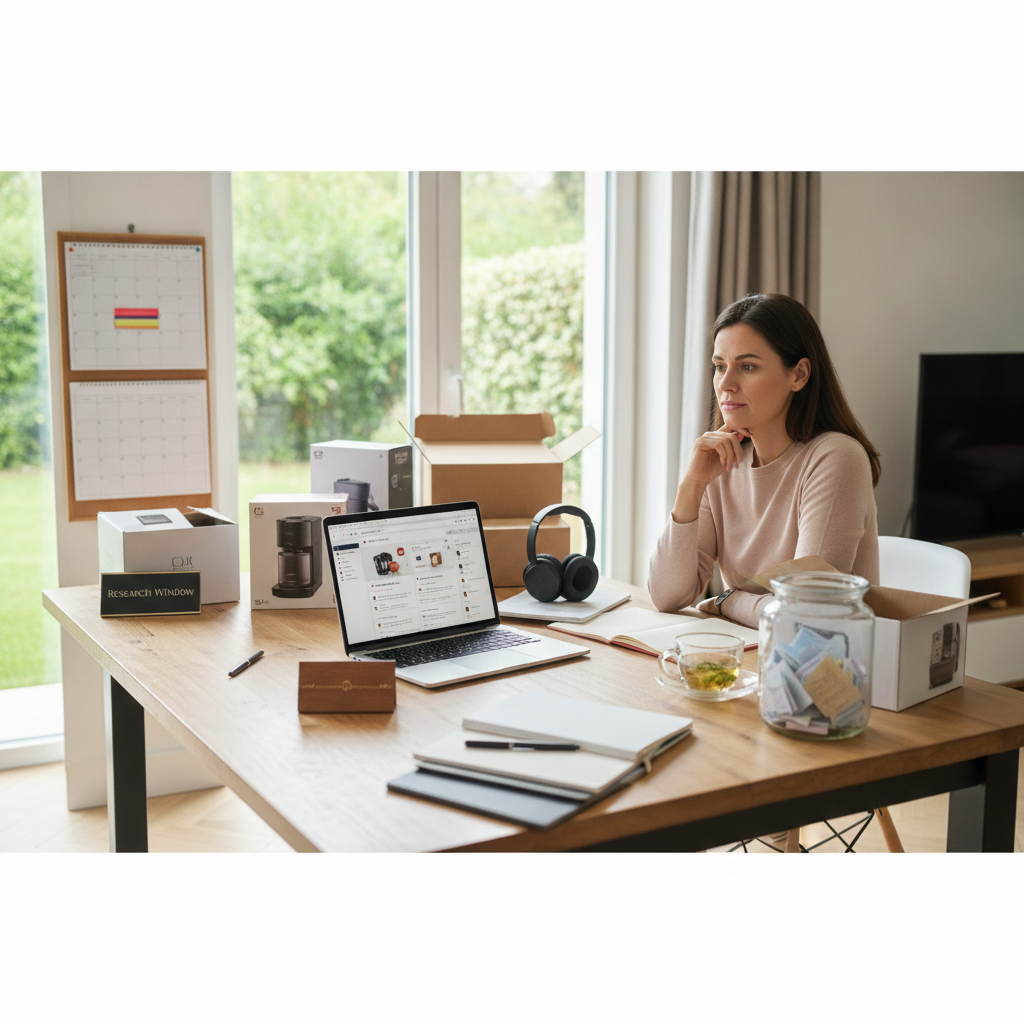
Buyer's remorse has a predictable origin story. You see something, you want it, and you buy it — sometimes within minutes. Then a few days later, the box is open, the receipt is buried, and that quiet, sinking feeling sets in. The item isn't wrong, exactly. You just didn't think it through. The good news is that this pattern isn't a personality flaw. It's a process gap, and it's one of the most fixable spending habits you can build around.
The fix isn't willpower. It's structure. Specifically, it's giving yourself a defined research window — a set period you commit to before spending above a threshold you choose in advance. Think of it as a built-in pause that turns a reactive purchase into a deliberate one. What follows are practical ways to make that window work for you.
Set Your Threshold Before You Ever Need It
The research window only works if you decide the trigger amount before you're standing in a store or scrolling through a product page. A threshold set in the moment of temptation isn't a threshold — it's a negotiation. Pick a number that feels significant but realistic for your spending patterns. Some people set it at fifty dollars, others at one hundred. The number matters less than the consistency. Once you land on it, write it down somewhere you'll actually see it, and treat it as a rule rather than a suggestion.
Decide the Window Length Based on the Category
Not every purchase above your threshold deserves the same length of research. A kitchen appliance and a piece of furniture aren't the same kind of decision. A useful approach is to tier your windows by category: everyday items might get twenty-four to forty-eight hours, electronics a week, and larger home investments two weeks or more. This prevents the window from becoming an excuse to delay indefinitely — a trap that turns a good habit into decision paralysis. Structure the duration before you need it, not during.
Use the Window to Build a Comparison Shortlist
The research window isn't just waiting time — it's working time. Use it to build an honest comparison between at least two or three alternatives. Tools like Google Shopping, Wirecutter, and Reddit's product communities make this faster than it used to be. What you're looking for isn't the cheapest option or the most-reviewed one, but the option that fits your actual use case. A lot of buyer's remorse comes from buying the right category of product but the wrong version of it.
Check Ownership Cost, Not Just Purchase Price
Price tags are the easiest number to focus on and often the least useful one. During your research window, take a few minutes to think through what owning the item actually costs: replacement parts, consumables, subscription fees, maintenance, or storage requirements. A Nespresso machine might seem like a straightforward buy until you factor in the ongoing pod cost. A cast iron skillet from Lodge, on the other hand, may cost more upfront but has essentially no ownership overhead. That full picture is what the research window is built to surface.
Read for the Failure Cases, Not the Praise
Most people read reviews looking for confirmation that the thing they already want is good. Flip that habit during your window. Actively search for the most common complaints, the one-star reviews with specific detail, and the Q&A sections on marketplace platforms like Amazon. This isn't about talking yourself out of a purchase — it's about knowing exactly what you're agreeing to before you agree to it. A product with a well-documented flaw you can live with is a better purchase than a product whose flaw surprises you after delivery.
Create a Simple Hold Ritual to Make the Window Stick
The practical challenge of a research window is breaking the habit of immediate checkout. A hold ritual helps. Add the item to a wishlist, screenshot the page, or drop it into a note in an app like Notion or Apple Notes. The act of saving it without buying it resets your brain's urgency signal. Many people find that the desire softens naturally within the first day or two — not because the product is bad, but because the emotional charge that drove the impulse fades when it's no longer in the moment.
Revisit With Fresh Eyes at the Window's End
When your research window closes, return to the item as if you're seeing it for the first time. Ask yourself whether you'd still add it to your cart if you encountered it today. This final check is where the system earns its value. Sometimes the answer is a confident yes, and you buy with zero hesitation. Other times, you realize the urgency has passed entirely. Both outcomes are wins — one gives you a purchase you feel good about, and the other saves you from one you wouldn't.
The research window isn't about slowing down your life or making shopping feel like a chore. It's about shifting the default from reactive to intentional. Over time, that shift changes not just what you buy, but how you feel after you buy it — and that quiet confidence in your own decisions is worth more than any single item in your cart.



