How Spending Your First Morning at a Destination Without an Agenda Sets the Tone for Every Day That Follows
Michael Thompson
08/06/2026
6 min read
There is a particular kind of exhaustion that arrives not from the journey itself but from the pressure to immediately make the journey meaningful. Travelers touch down in a new city, check into their accommodation, and before they've even located the nearest coffee, they're cross-referencing itineraries, calculating opening hours, and silently bargaining with themselves over which attraction justifies the first hour. The first morning becomes a transaction before it's ever a discovery. And in doing so, the trip begins with a subtle but defining miscalibration — one that tends to carry forward into every subsequent day.
The Unscheduled Morning as a Recalibration Tool
What seasoned travelers often describe, almost universally, is that the best experiences of a trip rarely came from the planned ones. They emerge from the hour before the plan started, or from the accidental turn that happened because no plan was demanding their attention yet. The unscheduled first morning functions less as leisure and more as a kind of internal recalibration — the mind and body adjusting to new light, new sounds, new rhythms of street life before being asked to perform. In Japan, this sensibility has a close relative in the concept of ma (間), which translates roughly as meaningful pause or the productive space between events. It isn't emptiness for its own sake; it's the interval that gives the surrounding structure its shape and resonance. A first morning without agenda operates on exactly this principle.
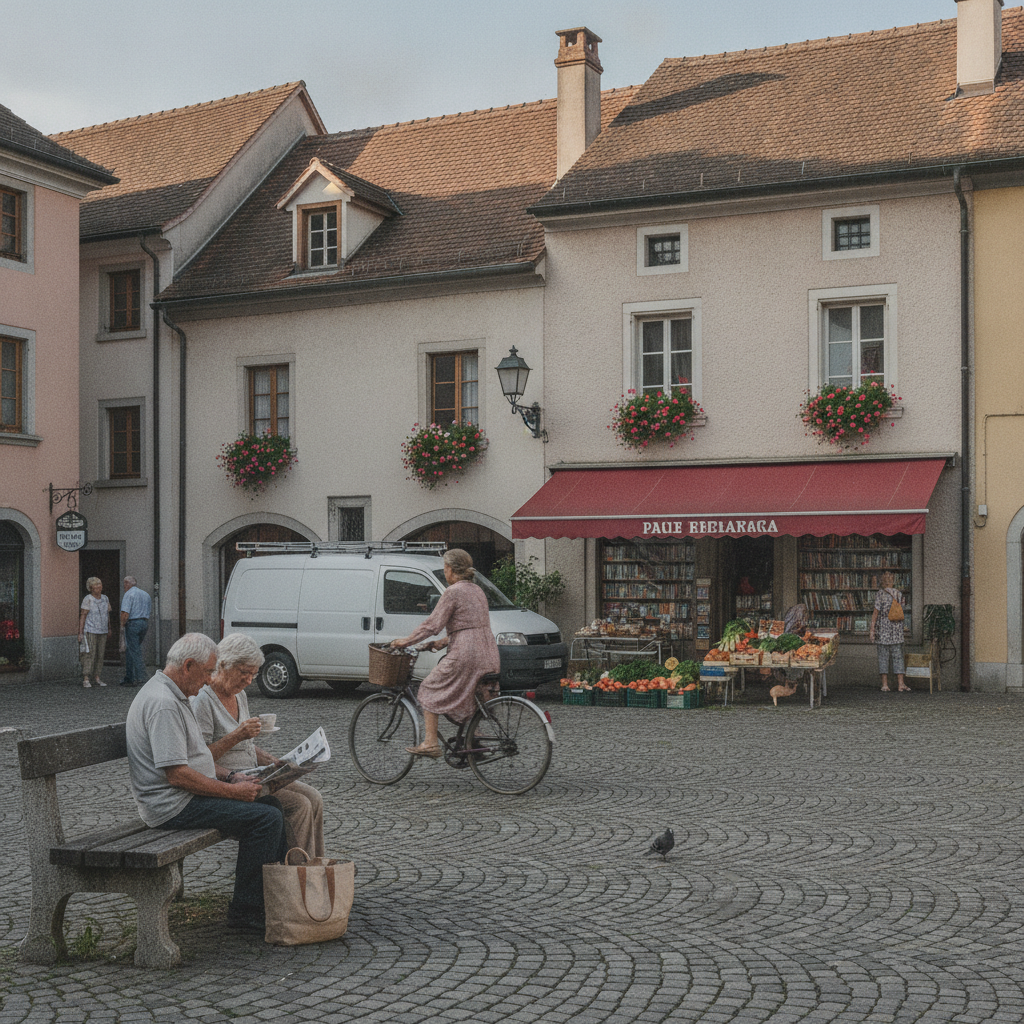
When travelers allow themselves to simply exist in a new place — to walk without direction, to sit in a café in Lisbon's Alfama district without a reservation elsewhere to honor — the destination begins to reveal itself on its own terms rather than on the terms of a guidebook. The light at a particular hour, the way locals move through a morning market, the ambient sounds of a neighborhood waking up: these are things that cannot be scheduled into an itinerary, yet they become the sensory foundation upon which all later memories are built. The first morning, deliberately kept open, functions as a kind of tuning — matching one's internal frequency to the place rather than imposing a foreign rhythm onto it.
How Presence Compounds Across the Days That Follow
The effect of an unhurried first morning is not confined to that morning alone. There is a compounding quality to it that shapes how a traveler inhabits the rest of the trip. Having allowed themselves the experience of genuine arrival — not the logistical arrival of checking in and unloading, but the psychological arrival of actually being somewhere — they carry a different quality of attention into everything that follows. Museums visited on day three feel less like obligations. Meals eaten without the pressure of a next stop become actual conversations rather than pit stops. Even the transit between places takes on a different character when the foundational experience of the trip isn't soaked in urgency.
This isn't a romantic abstraction. Travelers who arrive in cities like Porto or Oaxaca and spend the first morning doing very little — wandering, eating slowly, watching the neighborhood settle into its day — consistently report that they feel more oriented, less anxious, and more capable of spontaneous decision-making as the trip progresses. The absence of structure on the first morning paradoxically creates a kind of internal scaffolding that supports everything built on top of it. The French concept of flânerie — the practice of wandering observationally through urban space, made famous by 19th-century Parisian culture — captures something of this quality. The flâneur doesn't move toward anything specific; the movement itself is the point, and the city reveals itself in response.
What Gets Lost When Every Hour Is Claimed
The alternative — and it's the default mode for most modern travelers — is the fully claimed itinerary, where even the first morning is structured around a must-see landmark or a restaurant that requires booking weeks in advance. There's nothing inherently wrong with planning; the problem is when planning begins before presence does. When the first morning is already spoken for, the traveler never gets the chance to settle into the place. They arrive in a city like Kyoto or Cartagena already operating at a pace that belongs to a different context, and they spend the next several days trying to catch up with themselves.
Apps like Google Maps and TripAdvisor are extraordinarily useful tools for mid-trip logistics, but they carry an implicit pressure: the suggestion that the highest-rated version of a destination is the correct one to pursue. Used on the first morning, before any personal sense of the place has had time to form, they tend to flatten experience rather than enrich it. The recommendation arrives before the question, which means the traveler never quite develops their own instinct for what they're drawn to in this particular place. That instinct — slow to form, easy to interrupt — is one of the most valuable things travel can produce.
A Different Way to Begin
For those willing to experiment, the practice is straightforward. When you arrive at a destination, protect the first morning as deliberately as you'd protect a flight connection. Make no bookings for it. Set no alarms beyond a reasonable waking hour. Allow the first hours to be shaped entirely by what presents itself — hunger, curiosity, tiredness, light. Walk without a route. Sit somewhere and order something without checking whether the place is reviewed. Let the city or town come to you rather than moving aggressively toward it. This isn't passivity; it's a different kind of engagement, one that asks for attention rather than action.
The traveler who steps out of a guesthouse in Chiang Mai's old city on the first morning with no particular plan is not wasting time. They are, in a very practical sense, learning the place — absorbing the texture of it at ground level, calibrating their sense of distance and direction, discovering what kind of traveler they are in this specific context. That knowledge becomes the quiet infrastructure of everything that follows. By the time the scheduled experiences begin — the day trips, the cultural sites, the carefully chosen restaurants — there is already a foundation of genuine familiarity underneath them, and those experiences land differently for it. The trip that began with a pause moves forward with a kind of ease that the over-planned itinerary never quite finds, no matter how efficiently it fills the hours.
There's something quietly instructive about returning to that image of the traveler at dawn, itinerary folded away, standing on an unfamiliar corner without a particular direction in mind. That moment of deliberate openness — brief, unspectacular, easily surrendered to the pressure to be productive — turns out to be the one that makes everything else cohere.