How Designating a Single Physical Spot for Open Decisions Clears the Mental Clutter of Unfinished Thinking
Robert Kim
08/11/2026
5 min read
Unfinished thinking takes up more space than most people realize. It's not the big decisions that wear you down — it's the small, half-formed ones that hover quietly in the background while you're trying to do something else entirely. Should you renew that subscription? Reply to that invitation? Rearrange the spare room? Each open question sits somewhere in your mind, gently competing for attention even when you're not actively thinking about it. Over time, that background noise accumulates into a low-grade sense of mental fog that's hard to name but impossible to ignore.
The fix isn't a new app or a more disciplined schedule. It's something more physical and far simpler: a designated spot where unfinished decisions live until you're ready to deal with them.
Give Your Open Decisions a Physical Home
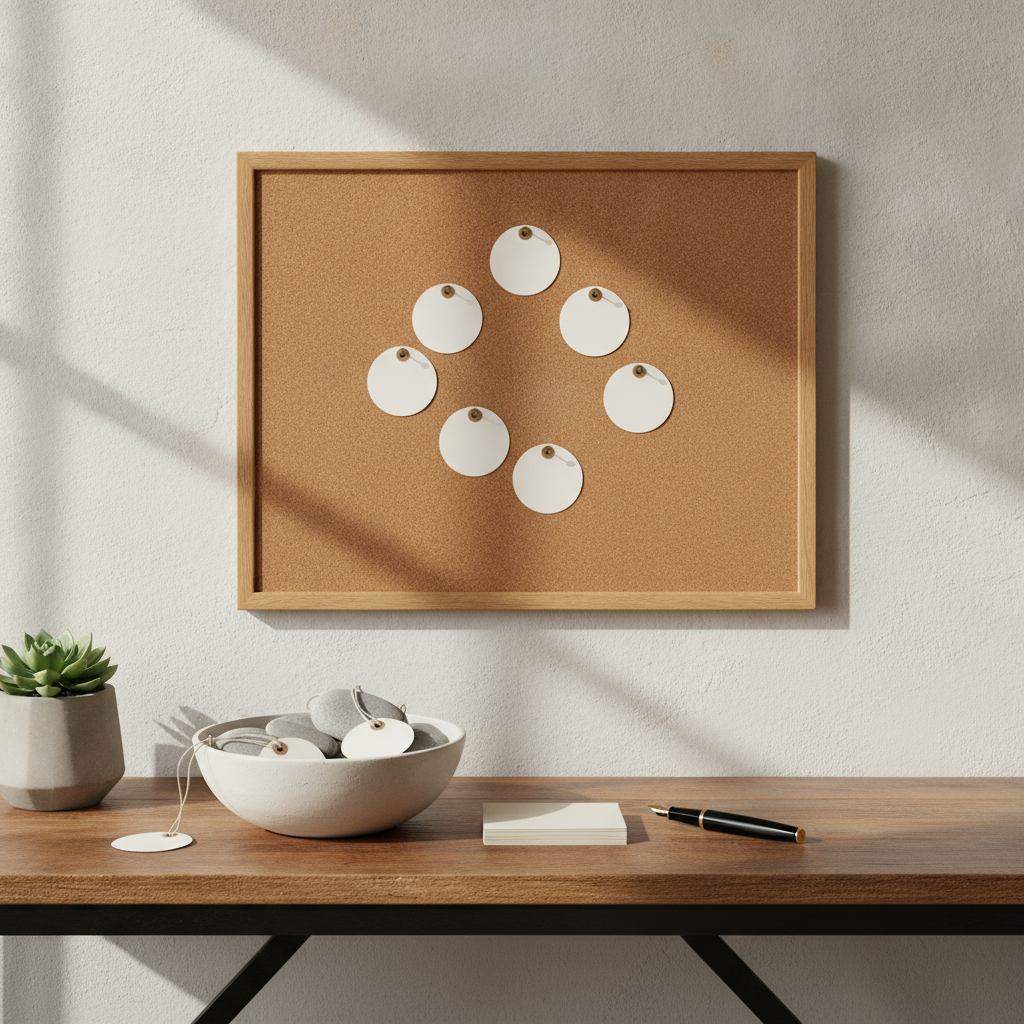
The idea is straightforward. You choose one spot — a small tray, a notebook, a corner of your desk — that becomes the official holding place for anything you haven't decided yet. When something needs your attention but doesn't need it right now, it goes there. A printed email. A sticky note. A small object that represents a choice. The act of placing something physically in that spot signals to your brain that the thought has been acknowledged and parked, which is often enough to release it from active mental circulation.
Choose a Spot That Naturally Catches Your Eye
Location matters more than you'd think. A decision tray that's buried in a drawer doesn't serve the same purpose as one that sits on a surface you pass regularly. The kitchen counter near the kettle, the edge of a home desk, or a small shelf in an entryway — somewhere you already glance at without effort. Muji makes compact desk trays that work well for this, and even a simple ceramic bowl from a local market can do the job. The goal is visibility without intrusion: you want to see it, not be overwhelmed by it.
Keep the Spot Deliberately Small
Restricting the physical size of your decision spot does something useful — it prevents accumulation from becoming its own problem. When the tray is full, you know it's time to sit down and work through what's there. A surface that could hold twenty items invites indefinite deferral. A small tray that holds five or six forces a kind of natural triage. You're less likely to let things pile up when the container itself sets a limit. Think of it as a built-in prompt, not a storage system.
Schedule a Weekly Check-In With the Spot
Having a place for open decisions only works if you actually return to them. Set aside fifteen to twenty minutes once a week — Sunday evenings work well for many people, but any consistent slot will do — to look through what's accumulated and make a call on each item. Some things will resolve themselves by the time you get there. Others will finally have enough context to decide. A few might get returned for another week, and that's fine too. The ritual of returning regularly is what keeps the system from becoming a guilt pile.
Use the Spot to Separate Urgency From Importance
One of the most practical benefits of a physical decision spot is that it forces a brief sorting moment every time you add something. Before placing an item, you naturally assess whether it actually belongs there or whether it needs to be acted on immediately. That two-second pause is more valuable than it sounds. It trains you to distinguish between things that feel urgent and things that genuinely are — a distinction that gets blurry when everything lives in your head at once.
Let the Spot Handle Relational Decisions Too
Not every open decision is a task. Some are relational — whether to bring something up with a partner, how to respond to a friend's situation, whether to adjust a recurring plan with someone. These tend to linger longest because they carry emotional weight and rarely feel like the right moment to address. Writing a brief note and placing it in your decision spot doesn't solve the conversation, but it removes the low-level anxiety of worrying you'll forget to have it. Notepads from brands like Appointed or Field Notes work well for this kind of brief, honest capture.
Resist the Urge to Digitize the System
There's a temptation to recreate this concept in a task manager or notes app, but something gets lost in translation. Digital systems are excellent for action items and deadlines. They're less suited to the ambiguous, half-formed nature of open decisions, which often need a different kind of mental engagement than a checkbox provides. The physicality of a tray or spot creates a subtle psychological boundary — a place that exists outside the flow of your regular work, which is exactly what unresolved thinking needs.
Clear the Spot Completely Once a Month
Beyond the weekly check-in, a full monthly reset keeps the system honest. Take everything out, look at each item fresh, and ask whether it still needs to live there. Some decisions will have expired — circumstances changed and the question dissolved. Others will have been decided without you formally closing them out. Clearing the spot completely, even if you return most items, resets your relationship with what's actually still open. It's a small act, but it prevents the spot from quietly becoming a place where things go to be ignored rather than resolved.
A physical home for open decisions won't eliminate uncertainty, and it won't make hard choices easier. What it does is remove those choices from the crowded, invisible space where they compete for your attention without ever getting resolved. Over time, the simple habit of placing unfinished thinking somewhere it can wait — and returning to it deliberately — creates a quieter mental environment, one where you're free to be fully present in whatever you're actually doing right now.