What Happens When You Curate a Rotating Set of Three Ambient Sounds for Different Times of Day Instead of Defaulting to Silence or Noise
Sarah Mitchell
09/28/2026
5 min read
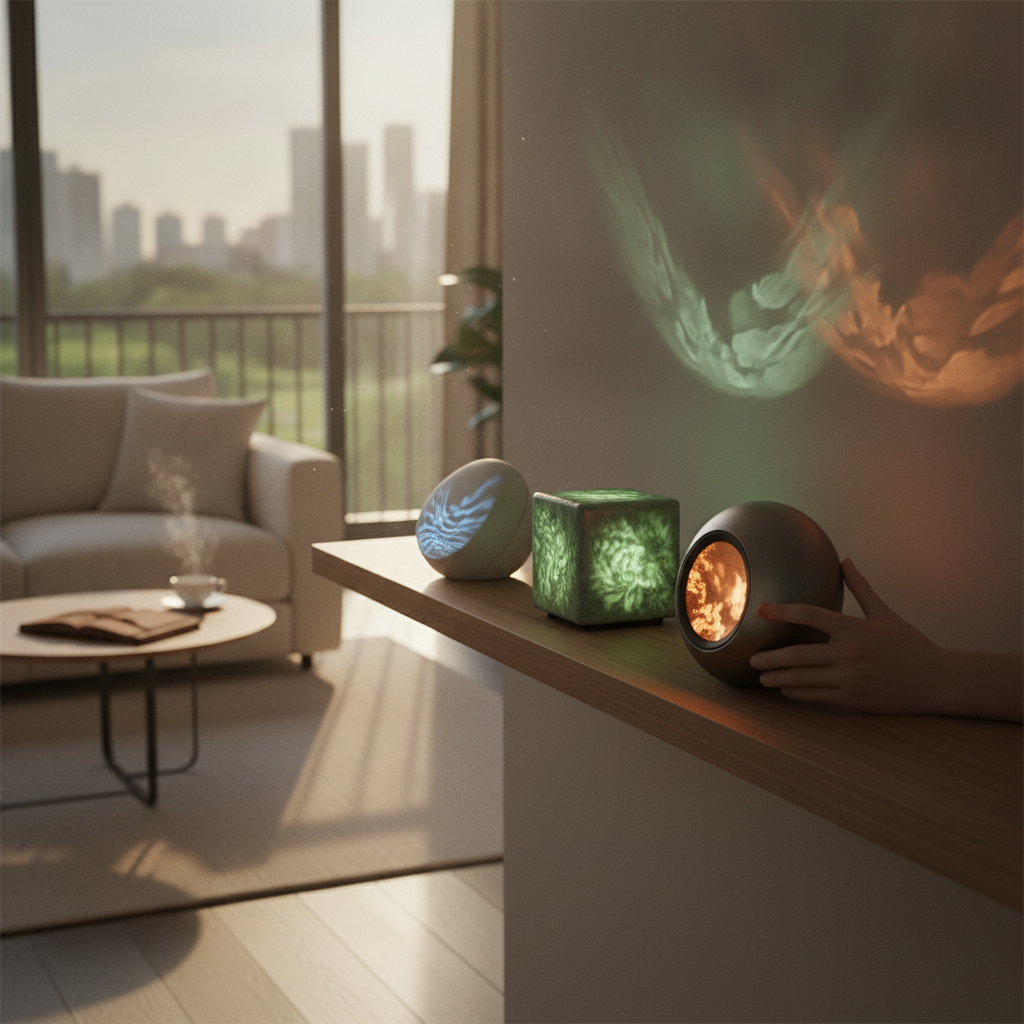
Sound shapes the interior life of a home in ways that most people never consciously examine. The default choices — television left on for company, music shuffled without intention, or the particular flatness of total silence — all carry their own emotional weight, whether or not that weight is chosen. There is something quietly significant about the idea of treating ambient sound the way one might treat light: as an environmental condition that can be designed, adjusted, and rotated to serve different hours and different states of mind. When people begin curating a small, rotating set of ambient sounds for morning, midday, and evening rather than reaching for whatever is nearest or simplest, they tend to find that the practice does something more nuanced than simply filling space. It begins to structure time itself.
Why Does Ambient Sound Affect How a Day Feels?
The relationship between sound and cognitive state is not incidental — it is deeply embedded in how human attention organizes itself across waking hours. Certain frequencies and rhythmic patterns associated with low-density ambient recordings, such as the gentle layered textures found on apps like Brain.fm or in dedicated sound libraries like myNoise, tend to reduce the mental cost of transitioning between tasks or moods. What researchers call soundscaping — the deliberate design of acoustic environments — has long been applied in commercial and therapeutic settings, from the curated noise profiles of Ace Hotel lobbies to the careful acoustic softening of hospital recovery wards. The principle behind all of it is consistent: unstructured sound produces unstructured attention, while intentional sound creates a kind of perceptual scaffolding. For those who work from home or move through domestic life without the natural acoustic variety of commuting, offices, or public spaces, the absence of designed sound is particularly noticeable, even if its effect goes unnamed.
For morning hours, sounds with a degree of natural brightness — birdsong layered beneath soft rain, or the ambient register of a busy café like those recreated on Coffitivity — tend to support the cortisol-linked alertness that marks the early part of the day. The biological logic is roughly parallel to light exposure: the body expects a certain quality of environmental input as a signal that the day has begun. Midday sound environments often benefit from something more neutral and steady, the kind of continuous, low-information texture that provides presence without demand. This is where binaural recordings of forest paths or slow-moving water function particularly well — they sustain concentration without pulling focus away from it. Evening soundscapes call for something altogether different: a gradual acoustic dimming that mirrors the natural world's retreat from activity. Deep ambient tones, recordings of distant rainfall, or slow instrumental textures without melodic hooks all serve the same function, cueing the nervous system toward deceleration without requiring any deliberate effort from the listener.
How Does a Three-Sound Rotation Create Rhythm Without Rigidity?
The particular appeal of committing to exactly three sounds — rather than an unlimited playlist or a single all-day track — lies in what the constraint produces. Three sounds, one for each broad period of the day, create a rotation simple enough to become habitual but varied enough to mark genuine transitions. This is the acoustic equivalent of zeitgeber, a German word used in chronobiology to describe external time-givers, cues that help the internal clock orient itself to the rhythm of the day. Light is the most powerful zeitgeber, but sound is a meaningful secondary signal, especially in interior environments where natural light is limited or inconsistent. The routine of shifting from a morning texture to a midday one to an evening one gradually becomes its own kind of punctuation — a non-verbal announcement that one phase of the day has ended and another is underway.
People who adopt this practice often report something they struggle to articulate at first: the days begin to feel longer, not in a burdensome sense, but in the sense that the hours seem more distinguishable from each other. This is not surprising, since sonic variety functions as a kind of episodic marker in memory. Days that sound identical — the same silence, the same television murmur, the same ambient shuffle — compress in retrospect into an undifferentiated stretch. Days with distinct acoustic textures attached to distinct periods create more retrieval points, more internal shape. The practice is, in this way, a subtle form of time architecture — one that requires almost no effort once the three sounds have been chosen and the habit of rotating them is in place.
What Should You Actually Consider When Choosing Your Three?
The selection itself is more personal than prescriptive, but a few principles tend to hold across different living situations. The morning sound should invite rather than demand — it should have enough presence to signal the start of the day without requiring active listening. The midday sound works best when it is genuinely neutral, texturally interesting but emotionally inert, the kind of thing the ear can rest on without following. The evening sound should have a quality of closure, something that makes stillness feel earned rather than empty. Platforms like Endel, which generates adaptive soundscapes based on time of day and environmental input, can serve as a starting point for those uncertain where to begin. But the more durable version of this practice is one where the sounds are chosen by feel over time — tried, adjusted, and finally settled into the way one eventually settles on the right lamp for a particular corner of a room. The goal is not variety for its own sake, but a small, well-considered repertoire that the home can almost seem to wear.
When you arrive at your own three — the morning texture that makes the kitchen feel inhabited, the midday hum that holds your focus without crowding it, the evening tone that tells your body the work is genuinely over — what you've built is something quieter and more durable than a playlist. You've given the hours of your day a distinct acoustic personality, and in doing so, you've made the shape of your time easier to feel. The practice returns you, in a way, to the opening observation: sound has always been shaping the interior life of wherever you live. The only question was whether you'd decided to be deliberate about it.



