How Checking a Product's Manufacturing Origin Against Its Brand's Quality Consistency Claims Helps You Decide Before You Commit
Robert Kim
09/23/2026
4 min read
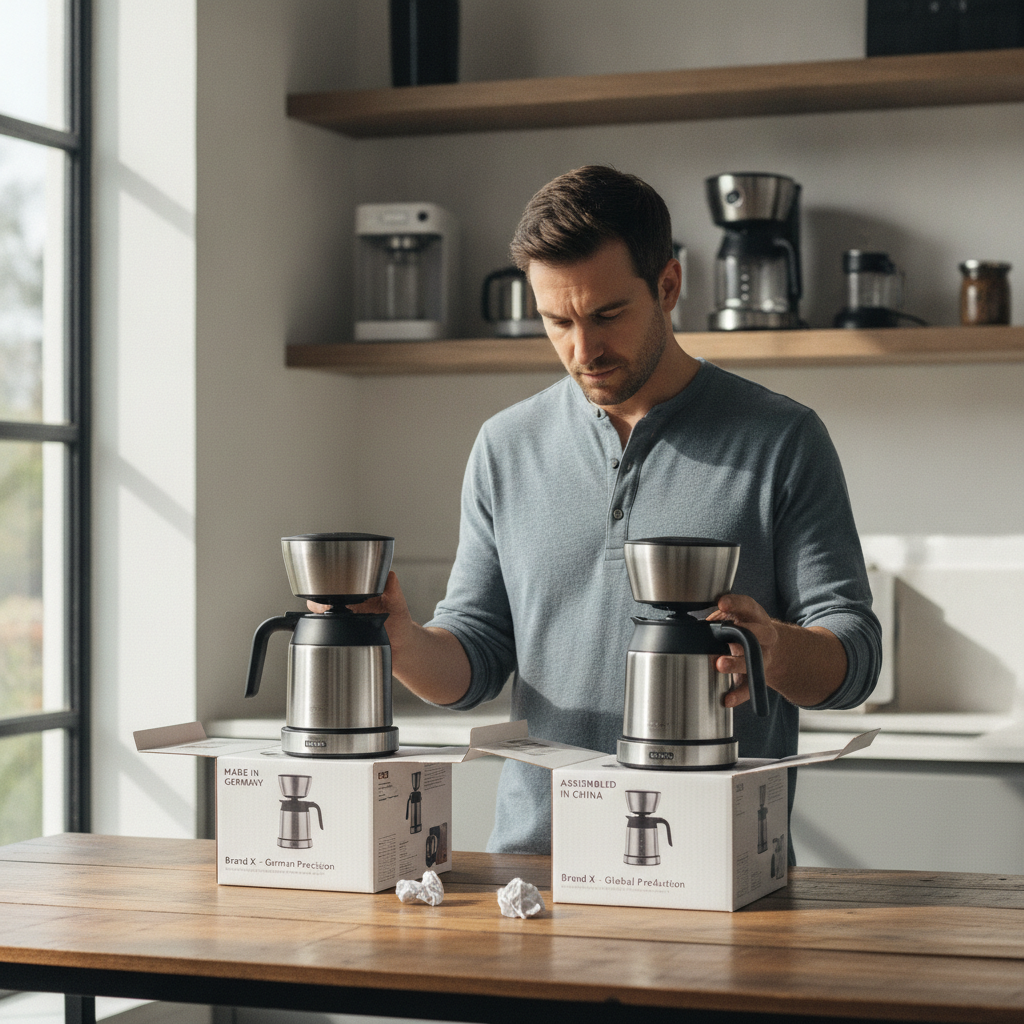
A brand's stated values and the actual conditions under which its products are made don't always point in the same direction. When a company markets itself around durability, craftsmanship, or rigorous quality control, those claims carry an implicit promise — one that manufacturing origin can either support or quietly contradict. Learning to cross-reference where something is made against what a brand says about how it's made gives shoppers a clearer picture before money changes hands.
Why Manufacturing Origin Carries More Signal Than Most Shoppers Realize
Where a product is manufactured isn't just a logistical footnote — it reflects decisions a brand made about cost, labor standards, material access, and production oversight. A company that emphasizes handcrafted precision but contracts production to a facility running high-volume, low-margin operations is making a claim the supply chain doesn't fully support. Shoppers who treat origin as a neutral data point often miss the context it provides. Manufacturing location interacts directly with a brand's pricing model, quality tier, and the kind of oversight that's realistically possible across long supply chains.
When Brand Claims and Production Reality Diverge
Some of the most revealing inconsistencies appear when a brand's marketing language outpaces what its manufacturing setup can reliably deliver. A label that promotes slow-production principles while operating out of factories known for high-turnover, multi-brand contracts is presenting a story that doesn't hold together under scrutiny. This gap isn't always deliberate misrepresentation — sometimes it reflects a brand growing faster than its supply chain accountability did. Either way, the mismatch is a useful signal. Levis, for example, has been transparent about its global manufacturing spread in ways that invite meaningful comparison with its quality positioning, while smaller brands often lack that documented consistency.
How to Research a Product's Origin Before Purchase
Most products sold in the United States are legally required to carry a country-of-origin label, which is a starting point rather than a complete answer. The more useful research step is comparing that origin against verified manufacturing standards associated with that country's industry norms for the product category in question. A ceramic item from a region with a documented artisan tradition carries different reliability signals than one from a facility processing thousands of units per day. Brand websites, third-party retailer Q&A sections, and sustainability disclosures — increasingly required by platforms like Patagonia's public supply chain maps — can provide the additional layer that a single label cannot.
Reading Quality Consistency Claims With a Critical Eye
Phrases like "rigorously tested," "built to last," and "quality assured" appear frequently in product descriptions without any supporting framework. The more useful questions are: what does testing actually involve, who conducts it, and does the production context make rigorous testing logistically plausible? A brand manufacturing in facilities that rotate between dozens of clients faces real constraints on the kind of consistency oversight it can maintain. When a brand publishes specific quality benchmarks — materials sourcing standards, rejection rates, inspection protocols — those details are more informative than general assurances. Absence of specifics isn't automatically disqualifying, but it shifts the burden of proof.
The Role of Consistent Buyer Feedback Across Product Generations
One of the most reliable ways to test whether a brand's quality claims hold across its manufacturing choices is to look at buyer feedback not just for the current version of a product, but across multiple purchase generations. When reviewers consistently note that quality declined after a production shift — a detail that often surfaces as "the older version was better" or "this feels different from what I bought three years ago" — that pattern frequently corresponds to a manufacturing location change or a factory switch. Brands like All-Clad have built reputations partly because buyers tracking their products over years report consistent construction, which reinforces rather than undermines the brand's quality narrative.
What This Looks Like as a Practical Pre-Purchase Habit
Before committing to a purchase, you can run a simple two-part check. First, find the manufacturing origin — on the label, in the product listing, or through the brand's supply chain disclosures if available. Second, search for buyer commentary that specifically references quality changes over time, not just current satisfaction. If a brand is claiming consistent craftsmanship but its manufacturing origin shifted recently with no public explanation, that's worth pausing on. Look for whether the brand acknowledges where things are made as part of its identity, or whether origin details are buried or absent. Transparency here tends to correlate with accountability elsewhere. Brands that treat manufacturing location as a feature rather than a footnote are usually more invested in delivering on the quality story they're telling.
Cross-referencing manufacturing origin against quality consistency claims isn't about distrust — it's about giving brand promises the same scrutiny applied to price, design, or return policy. A company's production decisions are part of its product. When those decisions align with what the brand says about itself, confidence in a purchase is well-founded. When they don't, that mismatch is worth factoring in before the transaction is final.



