What Happens When You Assign Each Season One Room to Rearrange Instead of Redecorating the Whole Home at Once
Robert Kim
10/04/2026
4 min read
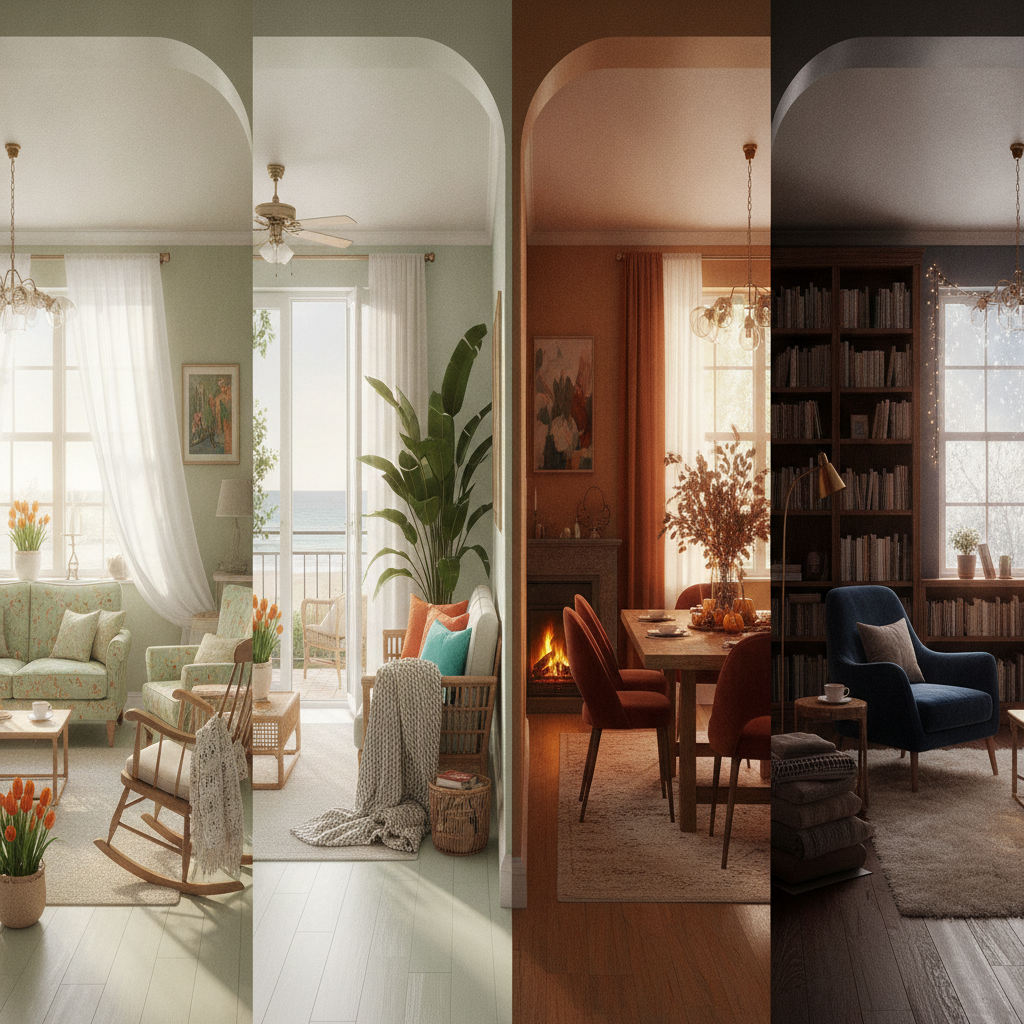
Most home refresh attempts collapse under their own ambition. You start with the living room, move a few things, lose momentum by mid-afternoon, and end up with a pile of displaced objects and no clear vision. The whole-house overhaul is one of those ideas that sounds energizing in theory but rarely survives contact with a real weekend.
There's a quieter approach worth considering — one that matches the natural rhythm of the year rather than fighting it.
How Does Assigning One Room Per Season Change the Experience?
When you give each season a single room to work with, the project becomes something you can actually finish. You're not managing a whole home renovation; you're spending a few focused hours rethinking one space. That shift in scope changes your energy level, your decision quality, and your sense of satisfaction at the end. A complete room feels like real progress, even if it's modest. Four rooms across a year is a quietly transformed home.
Why Completion Matters More Than Scale
Finishing something — even something small — builds momentum in a way that abandoned large projects simply can't. When you step back from a rearranged room that actually works better than it did before, that feeling carries forward. It makes you more willing to try again next season, and more thoughtful about what you attempt.
Which Room Works Best for Each Season?
There's no single right answer, but natural patterns tend to emerge when you think about how each season changes the way you use your home. Winter pushes you toward warmth and gathering, which makes the living room or a reading nook a natural focus. Spring brings an urge to clear and reopen space, making it a good match for an entryway or a home office. Summer often draws activity outdoors, leaving a bedroom or guest room underused and ready for a rethink. Autumn tends to call for coziness and function, making the kitchen or dining area worth reconsidering before the busy months arrive.
Letting the Season Guide the Logic
Using an app like Houzz or Roomstyler 3D Home Planner helps you sketch out ideas before you move a single piece of furniture. Both platforms let you experiment with layouts without physical effort, which makes it easier to spot a promising arrangement before committing to it. Planning digitally first also tends to reduce the mid-project uncertainty that makes people abandon the process.
How Do You Actually Start Without Feeling Overwhelmed?
The entry point matters. Rather than brainstorming everything you'd like to change, start by identifying what isn't working in the chosen room. Is there a corner that collects clutter because there's no clear purpose for it? A seating arrangement that makes conversation awkward? A piece of furniture that's there simply because it's always been there? One honest question — what in this room frustrates me most — tends to surface more useful direction than any mood board.
Setting a Realistic Time Window
Giving yourself a defined window — say, a Sunday afternoon from noon to four — removes the open-ended quality that makes big projects feel exhausting before they begin. The constraint is useful. It forces you to prioritize rather than endlessly adjust, and it means you walk away from the session with something finished rather than something ongoing.
What Tools Help You Plan Without Overcomplicating It?
Beyond layout apps, a simple notebook or a dedicated board on Pinterest serves as a useful holding space for ideas as they surface throughout the season. You're not committing to anything — you're collecting. When your designated rearrangement day arrives, you'll have a small bank of reference points instead of starting from a blank mental state. The Pinterest save function is particularly useful here because it lets you tag ideas by room, which keeps winter living room inspiration from mixing with spring entryway ideas.
Keeping the Costs Grounded
Rearranging is meaningfully different from redecorating. The goal isn't to buy new things — it's to work with what you have and discover whether a different configuration serves you better. That said, small functional additions occasionally make a real difference. A lamp moved from one room to another, a rug rotated to anchor a new seating arrangement, or a shelf cleared and repurposed can shift how a space feels without any new spending.
Why Does This Rhythm Sustain Itself Over Time?
A once-per-season room project creates a reliable cadence without demanding constant attention. You're not thinking about your home's layout every week — you're giving it four deliberate moments of focus per year, spaced far enough apart that each one feels fresh rather than like another item on an endless list. Over a few years, this approach quietly reshapes every room in the house without ever requiring a single overwhelming weekend.
Assigning one room per season reframes home improvement as something that fits into real life rather than interrupting it. The scale stays manageable, the satisfaction stays genuine, and the rhythm sustains itself without willpower. As the next seasonal shift approaches, it's worth picking your room now — before the moment passes and the urge fades into the background noise of a busy week.



